Thursday, May 22, 2014

Fauvism.

Fauvism (Wild Beast)

Fauvism was a ground breaking technique. In the late 1800 to 1900 era the predominant technique was impressionism. Impressionism mainly based on painting outdoors to capture change in daylight using short quick brush strokes. Impressionism was made normal after Claude Monet’s; Impression Sunrise. Avid art followers were used to seeing soft colours and peaceful seas of impressionist artwork. At that era in time people appreciated impressionism and it was regarded as the best art at the time until a group of artists showed their work amongst the impressionists and post impressionists at an exhibition in 1905. Where an art critic (Louis Vauxcelles) of the time explained and described these new group of artists as; Les Fauvs, Wild Beasts. This gave these artists a new name for their art form; Fauvism and giving a start to this genre of art.
A Vibrant Style of Painting
Many times artists worked by applying the paint directly from the paint tubes and tubs without mixing or diluting the paint with anything. When it came to depicting a subject Fauvism left things simple but the colours where exaggerated. Many artists who adopted this style began to simplify the details of their paintings and adopted new vibrant colours that were usually not used on such depicted subjects.
The pioneers of Fauvism and best in their genre of art were Henri Matisse and Andrea Derain. Both artists broke away from the traditional methods and experimented and exaggerated with colours.
Matisse and Derain worked closely together for a period in time; together they created highly different paintings which were on the forefront of Fauvism. Derain was once sent to London to produce a series of paintings with the city as the subject, he managed to depict the city in a portrait that was very different to how others had done it previously, till today these London painting remain one of his most popular piece of work.

Andre Derain.


Bathers 

Henri Mattise


Self portrait.


Le Joie le vivre.


Madras Rouge

Bibliography.

Cubism

Cubism

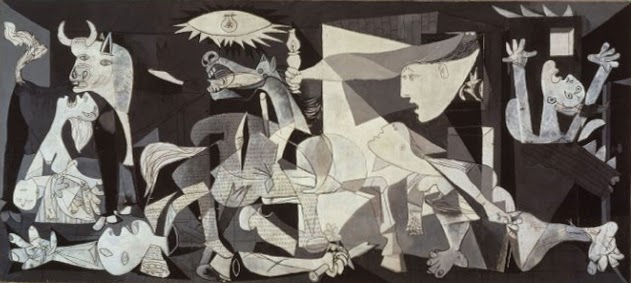
This is an art movement known as cubism. It was one of the first very modern art movements the world had ever known. Cubism was started by one of greatest and most famous artist in the history of art; Pablo Picasso. Cubism was a beautiful concept in art history, it featured various shifting view points and breaking objects and scenes up and building them up again in a different way.
George Braque and Picasso where painting at the same time in Paris. They were very influenced by the passed impressionism of the previous era.
Paul Cezanne
As an artist it is said that Cezanne formed or created a bridge between Impressionism and Cubism. His work laid the foundations of modern art as we know it in the 20th century. Cezanne’s style and brushstrokes seem to be highly distinguishable from other artists of his era. It was very common for him to used small brushstrokes that merge together and build up a complex fields of colour. A lot of his paintings depict and show Cezanne’s intense study and observation of his subject. Many painters famous of this era, such as Matisse and Picasso regard Cezanne as the father of Cubism and an influencer and mentor to all of them.
Henri Matisse
Originally known for his skill in draughtsmanship. He was a draughtsman by trade and, but is known primarily as a skilful painter, commonly regarded together with the likes of Pablo Picasso. Matisse is regarded as one of the artists who helped define plastic arts and responsible for various revolutionary developments in painting and sculpture. His expressive use of colour and drawing, displayed in his work spanning over a half-century, won him great recognition as a leading figure head in modern art.
Analytical Cubism
This is the method of breaking down a subject and depicting it in a way that all sides can be seen. When we look at the early cubism of Picasso and Braque they were working with primitive ideas and looks, most of the time they had nothing to go by and this was something that created and defined their style.

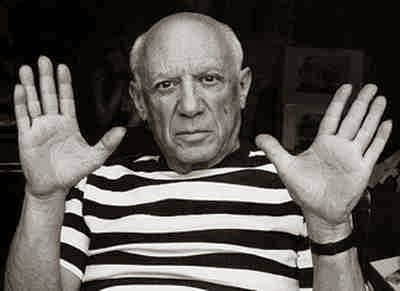
Pablo Picasso


Self portrait. 


Guernica 1937

 George Braque


Violin and Candlestick


Woman with a Guitar

Henri Matisse

Self Portrait.


Green Stripe


The Open Window

Analytical Cubism


Dora Maar au Chat 
Pablo P


 Maya with Doll
Pablo P


Man with Guitar
Braque's

Bibliography 


Impressionism

Impressionism is a French 19th century art movement. Impressionist artist capture the image of an object as if someone only managed to catch a quick glimpse of the subject or item. The key components in this technique or style are:
* Light
* Colour theory
* Technique
* Subject matter

When selecting and using colours the artists use complementary primary, secondary and tertiary on canvas to achieve colours that are found in nature. All of the artists in this era have their own style, most of the art revolved around light, wispy, short and small brush strokes on the canvas itself. Impressionist artists were the first to paint still lives. They also commonly illustrated women, children, everyday people, many opera scenes and various other subjects.

Famous French Impressionist Artists
Claude Monet
One of the many famous French impressionist was Claude Monet. Claude Monet was the founder and leader of the impressionist group, this group of artists borrowed their name from one of Monet’s Paintings; Impression Sunrise. Three of Monet’s favourite subjects to depict in his many paintings were seascapes, middle class people of the respective century and various outdoor scenes.
Eduard Manet and Berthe Morisot
Two other famous French impressionist artist were; Edouard Manet and Berthe Morisot. These were close friends and both were very keen artists. The pair were very much in-touch with the art scene of their century and knew many of the artists who are now regarded as the French impressionists of the 19th century. These two, together with the other impressionist artists they knew, went on to be the trend setters of Impressionism. Manet and Morisot frequently met with the various impressionist artists and encouraged them to exhibit their work.

In actual fact Edouard Manet was only an artistic influence of and befriended most of the Impressionists. He himself was not an actual Impressionist. He refused to be labelled as an impressionist and did not exhibit his art with other impressionists. However many Impressionists borrowed from his style very closely. Manet was trained in the usual academic manner but broke away from traditional styles; he brought a change in art. At the time Japanese art began to influence Europe. Manet was inspired by Japan’s art forms and lots of Japanese prints. Manet was also very famous for painting the same thing in different shades of light, on many occasions he would do some shading before starting a being piece. Manet’s close friend, Berth Min different shades of light. Morisot was one of the first women to join the group of French Impressionist painters.

Pierre-Auguste Renoir
As a painter he is mostly known for his portrait paintings, group portraits, landscapes and great depiction of textures of skins in portraits of people.

Edgar Degas
Degas is known as the master of drawing human figures in motion. He especially liked to illustrate Ballet performances.
Normally the paintings were small because the artist usually finished the piece on the spot where they sketched due to the fact that they were depicting still life. Sometimes impressionist art was criticised meaning less paintings. The development of photography also influenced many impressionists. Impressionism was a very influential art form; it very much changed the way we think about art, view it and create it. Impressionism inspired many people and artists from other art movements; one can say that it has changed the perspective of art itself.

Claude Monet


Water lilies 1916.

Eduard Manet 


Claude Monet Impression

Berthe Morisot


Berthe Morisot: L'hortensia, 1894

Pierre-Auguste Renoir


Portrait of a young girl 1878.

Edgar Degas


Three Dancers in an Exercise Hall, 1880 Oil on canvas

Bibliography 


The Industrial Revolution.


The Industrial Revolution.

The industrial revolution started between 1760-1840. This change included going from hand production methods to machines and the development of machine tools. There was a change from wood and bio-fuels to coal.

The industrial revolution occurred almost all over the world. But it started in Europe, mainly Britain. It started somewhere from the invention of the flying shuttle by John Kay in 1733. 

Flying Shuttle by John Kay. 


This machine increased the speed of weaving. This lead to the invention of the spinning jenny and water frame.

                                             Spinning Jenny.                                            

   Water Frame.


Then the most successful steam engine was invented by Thomas Newcome.
Steam engine.

In 1765 James Watt who was a Scottish mechanical engineer improved the Newcomer engine; Watt’s engine became one of the most important designs for all modern steam engines.


At that same time there was a huge change in social and living conditions too. Factory workers worked long hours for a little amount of money. The factory’s where in a bad condition to work in and even children from the age of 8 years old worked in these factories. Some people where even killed in factories due to minimum health and safety.
At that time people started to move closer to factories and lived in crowded buildings. The way they were living resulted to widespread disease.

Difference in social class:

Upper class: Very rich industrial and business families. Old noble class.
Upper middle class: Business people and professional such as lawyers and doctors.
Lower middle: other professionals such as teachers, shop owners and office workers.
Working class: factory workers and small farmers.

Bibliography.


Industrial Revolution — History.com Articles, Video, Pictures and Facts. 2013. Industrial Revolution — History.com Articles, Video, Pictures and Facts. [ONLINE] Available at: http://www.history.com/topics/industrial-revolution. [Accessed 05 March 2013].


Steam Engine History. 2013. Steam Engine History. [ONLINE] Available at:http://inventors.about.com/library/inventors/blsteamengine.htm. [Accessed 05 March 2013].


Dada Movement

Dada art movement.


Dada began in the beginning of WW1. When a group of artist decided to explore and create art in a different way like collages and manifest’s. Dadaist protested the brutality and senseless of that time. Many of the Dade’s artists fought in the war and rejected mass media and nationalist propaganda. This group of people created their own art movement and in 1917 the first DADA exhibition was held. But by 1919 all the artists had moved to other countries taking DADA with them.

Richard Hueldenbeck decided to move back to Berlin in the early 1917. Taking DADA with him. By that following year other DADA artists joined him, including George Grosz, Otto Dix, John Oluwasevn and Hanna Hoch. The DADA’s held the first DADA fair in berlin in the year 1920. Over the years the berlin DADA’s continued to express their discontent to the military and German nationalism trough their works of art.

DADA movement in Hannover was carried by the one and only Kurt Schweitzer’s. Kurt was rejected by the Berlin DADA’s. But he still created his own identity and created beautiful sculptures. DADA art rejected society ideas of what art should look like. DADA was the opposite of art to be anti-art.
 Dadaism 

-         Reactive art
-         Against rationality
-         Meaningless art
-         Anti-art.


Raoul Haussmann was part of the Dada movement in Berlin. His artistic interests were photo montage, painting, collages, poetry, design, sculpture, music and more.. Haussmann had a long time relationship with Hannah Hoch.